Capacity-class guide

Best 2000Wh Power Stations

This guide defines the 2 kWh class as 1,700–2,500 Wh and compares 8 verified current models. Rankings use documented capacity, output, portability, and use-case fit—not affiliate commission.

Top recommended picks

How we evaluate products
Anker SOLIX C2000 Gen 2 portable power station

Best overall 2000Wh-class option

Anker SOLIX C2000 Gen 2

A balanced match for the defined 2 kWh profile across battery capacity, inverter output, and transport weight.

2,048 Wh2,400 W41.7 lb

Trade-off: It weighs 41.7 lb, so lighter eligible options may be easier to move.

Check price at manufacturer · Anker SOLIX USExact product listing at Anker SOLIX US — availability may change
Check Price on Amazon.comExact product listing at Amazon US — availability may change

Best lower-cost uses stored USD MSRP references only, not live retail pricing or converted Canadian pricing.

2000Wh-class comparison

Compare 4 of these picks
PickProductCapacityContinuous / surgeSolar inputWeight
Best overall 2000Wh-class optionAnker SOLIX C2000 Gen 22,048 Wh2,400 W / 4,000 W800 W41.7 lb
Best lower-cost optionEcoFlow DELTA 2 Max2,048 Wh2,400 W / 4,800 W1,000 W50 lb
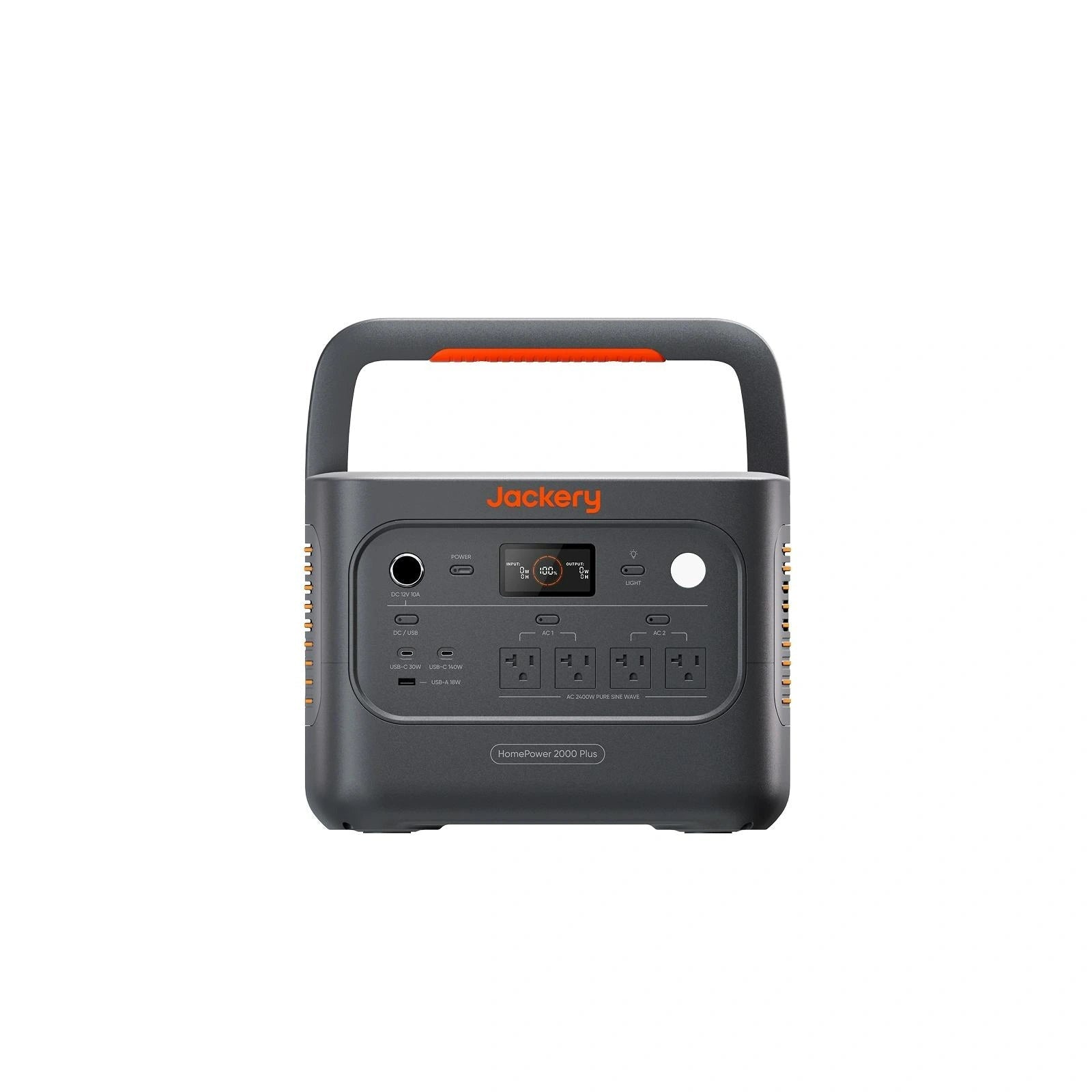
Best for home backupJackery HomePower 2000 Plus v22,048 Wh2,400 W / 4,800 W800 W41.45 lb
Best for RV / off-gridAnker SOLIX S20002,010 Wh1,500 W / 3,000 W400 W35.7 lb
Best high-output optionBLUETTI Elite 200 V22,073.6 Wh2,600 W / 3,900 W1,000 W53.35 lb

Why these products fit

Best overall 2000Wh-class option

Anker SOLIX C2000 Gen 2

A balanced match for the defined 2 kWh profile across battery capacity, inverter output, and transport weight.

Reference need: 2,000 Wh · 1,500 W running · 2,500 W startup. Match score 93/100.

Why it matched

  • Meets your 1,500 W continuous running requirement.
  • Battery capacity is closely sized to your requested runtime.
  • Its surge rating covers your estimated 2,500 W startup requirement.
  • Includes UPS support for backup-power use.

Trade-off: It weighs 41.7 lb, so lighter eligible options may be easier to move.

Best lower-cost option

EcoFlow DELTA 2 Max

The lowest stored USD MSRP among in-class models with a recorded MSRP; this is not a live-price comparison.

Reference need: 2,000 Wh · 1,200 W running · 2,000 W startup · lowest stored MSRP. Match score 89/100.

Why it matched

  • Meets your 1,200 W continuous running requirement.
  • Battery capacity is closely sized to your requested runtime.
  • Its surge rating covers your estimated 2,000 W startup requirement.
  • Includes UPS support for backup-power use.

Trade-off: At 50 lb, it is difficult to carry frequently.

Best for home backup

Jackery HomePower 2000 Plus v2

A deterministic fit for longer essentials backup with enough output for the reference running and startup loads.

Reference need: 2,000 Wh · 1,500 W running · 2,500 W startup. Match score 93/100.

Why it matched

  • Meets your 1,500 W continuous running requirement.
  • Battery capacity is closely sized to your requested runtime.
  • Its surge rating covers your estimated 2,500 W startup requirement.
  • Includes UPS support for backup-power use.

Trade-off: It weighs 41.45 lb, so lighter eligible options may be easier to move.

Best for RV / off-grid

Anker SOLIX S2000

A mobile-use-weighted match for longer trips where usable capacity and carrying weight both matter.

Reference need: 2,000 Wh · 1,200 W running · 2,000 W startup. Match score 84/100.

Why it matched

  • Meets your 1,200 W continuous running requirement.
  • Battery capacity is closely sized to your requested runtime.
  • Its surge rating covers your estimated 2,000 W startup requirement.
  • Weighs 35.7 lb for transport.

Trade-off: Its battery capacity cannot be expanded later.

Best high-output option

BLUETTI Elite 200 V2

The highest continuous-output model in the verified 1,700–2,500 Wh class after applying the reference eligibility checks.

Reference need: 2,000 Wh · 2,000 W running · 3,000 W startup · highest in-class continuous output. Match score 86/100.

Why it matched

  • Meets your 2,000 W continuous running requirement.
  • Battery capacity is closely sized to your requested runtime.
  • Its surge rating covers your estimated 3,000 W startup requirement.
  • Includes UPS support for backup-power use.

Trade-off: At 53.35 lb, it is difficult to carry frequently.

Example setups

These examples reuse the existing calculator presets and calculation engine. Edit every device and duration to match your equipment.

Longer home outage

Refrigerator + Wi-Fi + lights + TV + laptop

Estimated energy need
2,155 Wh
Continuous running load
714 W
Startup / surge requirement
1,714 W
Size this setup

RV / off-grid weekend

Mini-fridge + laptop + TV + lights + phone

Estimated energy need
1,675 Wh
Continuous running load
324 W
Startup / surge requirement
524 W
Size this setup

Larger mixed-load backup

Fridge + freezer + Wi-Fi + lights + microwave + coffee maker

Estimated energy need
4,650 Wh
Continuous running load
1,029 W
Startup / surge requirement
2,029 W
Size this setup

What to consider

Who needs about 2 kWh

This class is useful when a 1 kWh plan is too short for refrigeration, work, or a multi-day trip but a 3 kWh+ system would add unnecessary bulk.

When 1 kWh is enough

Choose the smaller class when the calculator shows a lower energy need, loads are tightly prioritized, and recharging is available before the battery is depleted.

When to move to 3 kWh+

Move up when calculated energy and reserve exceed this class or longer gaps between recharges matter more than size and weight.

Capacity versus output

Watt-hours estimate duration; continuous and surge watts determine whether appliances can run. More capacity does not automatically mean a stronger inverter.

Size and weight

The verified 2 kWh-class models differ substantially in weight. Check the carry path, vehicle, storage location, and manufacturer clearance requirements.

Continue your research

Frequently asked questions

What counts as a 2000Wh-class power station here?

This guide uses current verified products from 1,700–2,500 Wh. All selected models are inside that range.

Who needs roughly 2000Wh?

This class can suit longer essentials-backup plans, RV or off-grid weekends, and users whose calculated energy need exceeds a practical 1 kWh setup. Output eligibility still comes before runtime.

When is 1000Wh enough?

A 1 kWh-class unit may be enough when the calculator shows a smaller energy need, the outage or trip is short, and recharge opportunities are available.

When should I move to 3000Wh or more?

Consider 3 kWh+ when the calculated need, desired reserve, or time between recharges exceeds this class and the added size and weight are acceptable.

This guide uses verified manufacturer specifications and transparent planning profiles, not hands-on testing, live-price, or live-availability claims.