Home backup guide

Best Power Stations for Home Backup

These picks come from our verified product records and deterministic home-backup scoring. Choose by the loads you need to run and the outage duration you want to cover—not by the biggest battery alone.

Shortlist

Top recommended picks

How we evaluate products
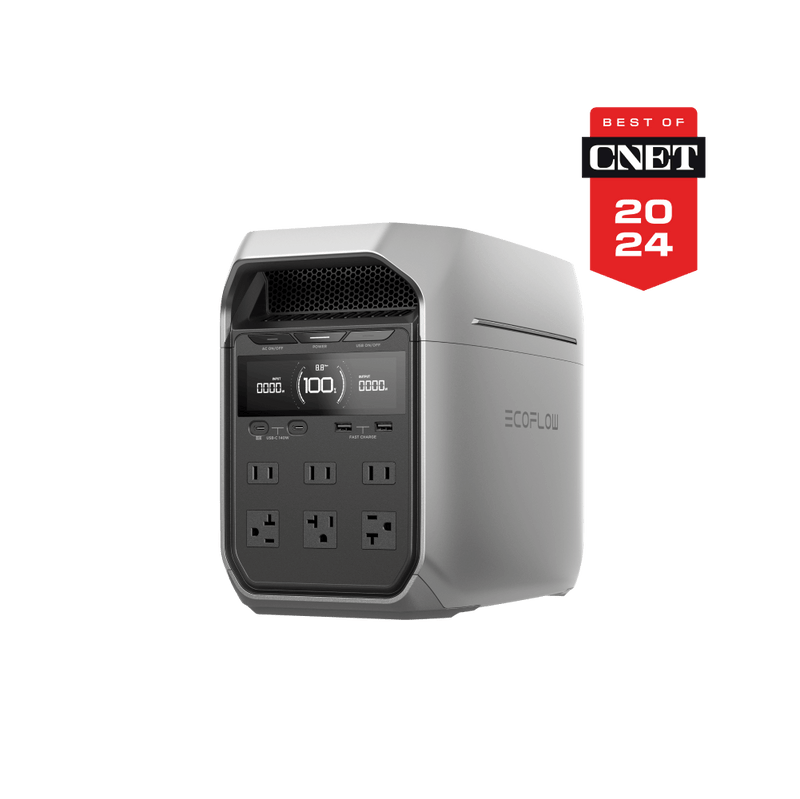
EcoFlow DELTA 3 Plus portable power station
Best lower-cost 1 kWh option

EcoFlow DELTA 3 Plus

The lowest stored MSRP reference in our 900–1,300 Wh, 1,500 W-or-higher shortlist, with ties resolved by the same match score.

1,024 Wh1,800 W27.6 lb

Trade-off: It weighs 27.6 lb, so lighter eligible options may be easier to move.

Check price at manufacturer · EcoFlow USExact product listing at EcoFlow US — availability may change
Check Price on Amazon.comExact product listing at Amazon US — availability may change
Home backup comparison

Compare 4 of these picks
PickProductCapacityContinuous / surgeWeightExpandable
Best overall for typical essentials backupAnker SOLIX C2000 Gen 22,048 Wh2,400 W / 4,000 W41.7 lbYes, up to 4,096 Wh
Best lower-cost 1 kWh optionEcoFlow DELTA 3 Plus1,024 Wh1,800 W / 3,600 W27.6 lbYes, up to 5,000 Wh
Best for apartmentsJackery Explorer 500 V2512 Wh500 W / 1,000 W12.57 lbNo
Best for longer outagesAnker SOLIX F30003,072 Wh3,600 W / 7,200 W91.5 lbYes, up to 12,288 Wh
Best high-capacity optionEcoFlow DELTA Pro 34,096 Wh4,000 W / 8,000 W113.5 lbYes, up to 12,288 Wh

Ratings are manufacturer specifications in our normalized dataset. Retail pricing and availability can change; use the market-specific links to check current offers.

Category details

Why these products fit different backup plans

Best overall for typical essentials backup

Anker SOLIX C2000 Gen 2

A balanced fit for a substantial essentials load without jumping straight to the heaviest class.

Reference backup profile: 1,800 Wh · 1,000 W running · 1,800 W startup. Match score 90/100.

Why it matched

  • Meets your 1,000 W continuous running requirement.
  • Battery capacity is closely sized to your requested runtime.
  • Its surge rating covers your estimated 1,800 W startup requirement.
  • Includes UPS support for backup-power use.

Trade-off: It weighs 41.7 lb, so lighter eligible options may be easier to move.

Best lower-cost 1 kWh option

EcoFlow DELTA 3 Plus

The lowest stored MSRP reference in our 900–1,300 Wh, 1,500 W-or-higher shortlist, with ties resolved by the same match score.

Reference backup profile: 900 Wh · 500 W running · 900 W startup. Match score 91/100.

Stored MSRP reference: $799. Based on stored MSRP reference, not live retail pricing.

Why it matched

  • Meets your 500 W continuous running requirement.
  • Battery capacity is closely sized to your requested runtime.
  • Its surge rating covers your estimated 900 W startup requirement.
  • Includes UPS support for backup-power use.

Trade-off: It weighs 27.6 lb, so lighter eligible options may be easier to move.

Best for apartments

Jackery Explorer 500 V2

A lighter option for short essential-load coverage where storage space and portability matter.

Reference backup profile: 500 Wh · 500 W running · 900 W startup · 20 lb maximum. Match score 92/100.

Why it matched

  • Meets your 500 W continuous running requirement.
  • Battery capacity is closely sized to your requested runtime.
  • Its surge rating covers your estimated 900 W startup requirement.
  • Includes UPS support for backup-power use.

Trade-off: Its battery capacity cannot be expanded later.

Best for longer outages

Anker SOLIX F3000

A larger battery for extended essential-load plans, with expansion available if needs grow.

Reference backup profile: 3,000 Wh · 1,200 W running · 2,000 W startup. Match score 86/100.

Why it matched

  • Meets your 1,200 W continuous running requirement.
  • Battery capacity is closely sized to your requested runtime.
  • Its surge rating covers your estimated 2,000 W startup requirement.
  • Includes UPS support for backup-power use.

Trade-off: At 91.5 lb, it is difficult to carry frequently.

Best high-capacity option

EcoFlow DELTA Pro 3

The top match for a demanding high-capacity profile in the current verified catalog.

Reference backup profile: 3,800 Wh · 2,500 W running · 4,000 W startup. Match score 87/100.

Why it matched

  • Meets your 2,500 W continuous running requirement.
  • Battery capacity is closely sized to your requested runtime.
  • Its surge rating covers your estimated 4,000 W startup requirement.
  • Includes UPS support for backup-power use.

Trade-off: At 113.5 lb, it is difficult to carry frequently.

Starting points

Example backup setups

These examples use the calculator's existing cited and curated appliance presets. Every wattage, duration, and simultaneous-load choice remains editable after opening the calculator.

Light backup

Refrigerator + Wi-Fi router + lights

Estimated energy need
1,175 Wh
Continuous running load
529 W
Startup / surge requirement
1,529 W
Size this setup

Medium backup

Refrigerator + Wi-Fi router + lights + TV + laptop

Estimated energy need
2,155 Wh
Continuous running load
714 W
Startup / surge requirement
1,714 W
Size this setup

Larger backup

Refrigerator + freezer + Wi-Fi router + lights + microwave and coffee maker used one at a time

Estimated energy need
4,650 Wh
Continuous running load
1,029 W
Startup / surge requirement
2,029 W
Size this setup

Energy need is device energy before the calculator adds conversion loss and reserve. Refrigerator and freezer startup allowances are planning estimates; verify each appliance nameplate.

How much capacity do you need?

Watt-hours determine approximate runtime; inverter watts determine whether a device can run at all. Add the energy used by each device, allow for conversion losses and reserve capacity, then check both continuous and startup output requirements.

Start with essentials: refrigeration, internet, lights, and a few outlets. If you plan to power a CPAP machine, enter its documented load and operating settings. Heating appliances, microwaves, pumps, and compressors can move the required inverter size sharply upward.

For medically critical equipment, follow the device manufacturer and healthcare provider's backup-power guidance.

Build your own backup plan

Add your devices and desired hours. The calculator checks energy, continuous load, and startup surge before recommending products.

Size my power station

Frequently asked questions

How many watt-hours do I need for home backup?

Start with each device’s average watts and intended hours, then add conversion losses and reserve capacity. A refrigerator, internet equipment, lights, and medical equipment can have very different energy and startup needs, so one generic battery-size answer is rarely reliable.

Can a portable power station run a refrigerator?

It can only do so when both the continuous inverter rating covers the refrigerator’s running load and the surge rating covers its startup requirement. Battery watt-hours then determine the approximate runtime.

Is a larger power station always better?

No. Extra capacity can extend runtime, but it also usually adds weight, size, and cost. Our matching logic rewards adequate headroom and penalizes unnecessary oversizing.

Do affiliate commissions affect these recommendations?

No. Eligibility and ranking use the same capacity, output, portability, use-case, and feature criteria described in our methodology. Price and commission rates are not ranking inputs.

This guide uses manufacturer specifications and transparent planning profiles, not hands-on testing claims. Check the linked product record and manufacturer documentation before purchase.