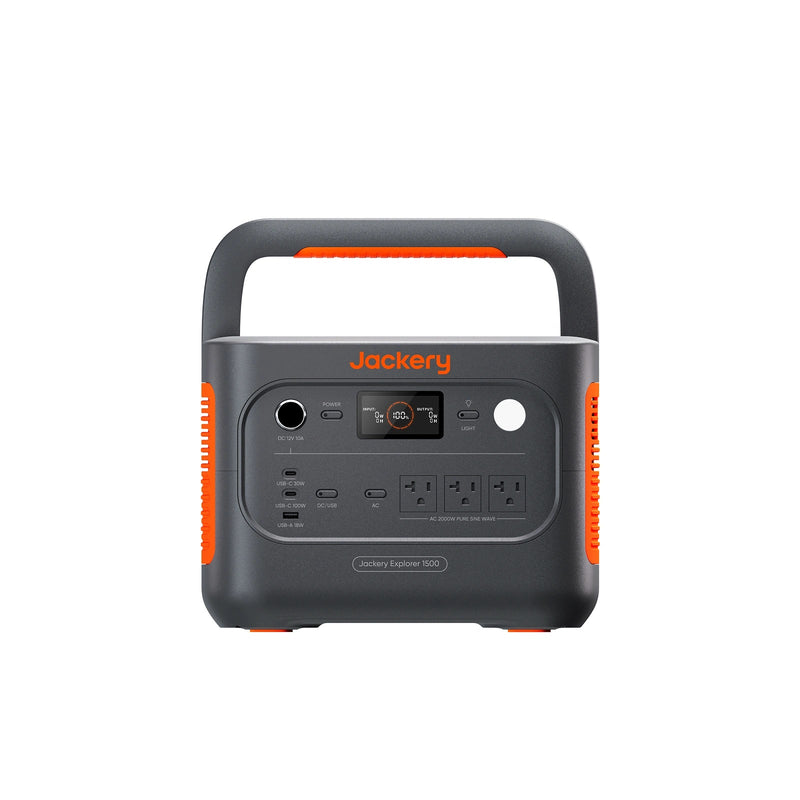
Jackery Explorer 1500 V2
A balanced match for refrigeration, lights, electronics, and occasional higher-draw loads without moving directly to the heaviest battery class.
Trade-off: Its battery capacity cannot be expanded later.
RV power guide
These picks use verified product records and deterministic planning profiles for RV essentials. Match capacity and inverter output to your own fridge, electronics, short-use appliances, trip length, storage space, and carrying limits.
Shortlist

A balanced match for refrigeration, lights, electronics, and occasional higher-draw loads without moving directly to the heaviest battery class.
Trade-off: Its battery capacity cannot be expanded later.

The smallest eligible enclosure for a modest RV profile where cabinet space and carrying weight are primary constraints.
Trade-off: Its battery capacity cannot be expanded later.

A close capacity and output fit for a short RV trip with a small fridge, lighting, and personal electronics.
Trade-off: Its battery capacity cannot be expanded later.
| Pick | Product | Capacity | Continuous / surge | Solar input | Weight |
|---|---|---|---|---|---|
| Best overall for RV use | Jackery Explorer 1500 V2 | 1,536 Wh | 2,000 W / 4,000 W | 400 W | 31.97 lb |
| Best compact option | Jackery Explorer 500 V2 | 512 Wh | 500 W / 1,000 W | 200 W | 12.57 lb |
| Best for weekend trips | BLUETTI Elite 100 V2 | 1,024 Wh | 1,800 W / 2,700 W | 1,000 W | 25.3 lb |
| Best for longer off-grid stays | Anker SOLIX S2000 | 2,010 Wh | 1,500 W / 3,000 W | 400 W | 35.7 lb |
| Best higher-capacity option | BLUETTI Elite 300 | 3,014.4 Wh | 2,400 W / 4,800 W | 1,200 W | 57.98 lb |
Ratings are manufacturer specifications in our normalized dataset. Retail pricing and availability can change; use market-specific links to check current offers.
Category details
Best overall for RV use
A balanced match for refrigeration, lights, electronics, and occasional higher-draw loads without moving directly to the heaviest battery class.
Reference RV profile: 1,200 Wh · 700 W running · 1,200 W startup. Match score 81/100.
View product detailsTrade-off: Its battery capacity cannot be expanded later.
Best compact option
The smallest eligible enclosure for a modest RV profile where cabinet space and carrying weight are primary constraints.
Reference RV profile: 500 Wh · 500 W running · 800 W startup · 25 lb maximum · smallest eligible enclosure. Match score 92/100.
View product detailsTrade-off: Its battery capacity cannot be expanded later.
Best for weekend trips
A close capacity and output fit for a short RV trip with a small fridge, lighting, and personal electronics.
Reference RV profile: 1,000 Wh · 900 W running · 1,300 W startup. Match score 93/100.
View product detailsTrade-off: Its battery capacity cannot be expanded later.
Best for longer off-grid stays
More stored energy and inverter headroom for multi-day RV plans with refrigeration and regular device use.
Reference RV profile: 2,000 Wh · 1,200 W running · 2,000 W startup. Match score 84/100.
View product detailsTrade-off: Its battery capacity cannot be expanded later.
Best higher-capacity option
The strongest deterministic match for a larger RV power profile when runtime matters more than easy carrying.
Reference RV profile: 3,000 Wh · 1,800 W running · 3,000 W startup. Match score 80/100.
View product detailsTrade-off: At 57.98 lb, it is difficult to carry frequently.
Starting points
These examples use the calculator's existing cited and curated device presets. Every wattage, duration, cycling assumption, and simultaneous-load choice can be edited after opening the calculator.
Mini-fridge + two LED lights + phone charging
Mini-fridge + laptop + TV + two lights + phone charging
Mini-fridge + laptop + TV + four lights + phone + short-use coffee maker and microwave
Energy need is device energy before conversion loss and reserve. Mini-fridge duty cycle and startup allowance are editable planning estimates; coffee-maker and microwave examples are modeled as short, separate uses. Verify every appliance nameplate.
Planning trade-offs
More watt-hours usually add weight. Size for the trip and realistic recharge opportunities instead of treating the largest battery as automatically best.
Fridge energy depends on technology, temperature, cycling, and operating mode. Continuous output and compressor startup must pass before runtime is considered.
These moderate loads can add substantial energy over many hours. Use the actual charger, display, and lamp labels when refining the calculator setup.
Brief use limits energy, but their high input wattage can still determine the minimum inverter size. Avoid assuming cooking output equals electrical input.
Compare panel plans with the station’s solar-input limit and allow for weather, shade, panel angle, temperature, and limited daylight.
Check the verified dimensions and weight against the intended compartment and lifting route, leaving any clearances required by the manufacturer.
Add your own appliances and intended hours. The calculator checks energy, continuous load, and startup surge before recommending products.
Also compare our Home Backup, Camping, CPAP, and Apartments guides.
Add each device’s wattage multiplied by its expected operating time, account for cycling appliances such as a fridge, and then allow for conversion losses and reserve. Trip length, cooking loads, and recharge opportunities can change the result substantially.
Only when its continuous output covers the fridge’s running load and its surge rating covers compressor startup. Battery capacity then determines approximate runtime. Use your fridge nameplate or manufacturer documentation because RV refrigerators vary by type and operating mode.
Possibly, but these are high-wattage loads even when used briefly. The inverter must support the appliance input wattage, and the energy used should be included in the trip plan. Verify the appliance nameplate rather than relying on advertised cooking output.
Not necessarily. Charging depends on the station’s solar-input limit, panel rating, sun, shade, angle, temperature, and available daylight. Treat rated solar input as a limit rather than guaranteed field production.
No. Eligibility and ranking use documented capacity, output, portability, RV-use, and feature criteria. Price and commission rates are not ranking inputs.
This guide uses manufacturer specifications and transparent planning profiles, not hands-on testing claims. Check the linked product record, appliance labels, and manufacturer documentation before purchase or installation.