Camping power guide

Best Power Stations for Camping

These picks come from verified product records and deterministic camping scoring. Match the battery to your actual devices, trip length, startup loads, and carrying limits—not capacity alone.

Shortlist

Top recommended picks

How we evaluate products
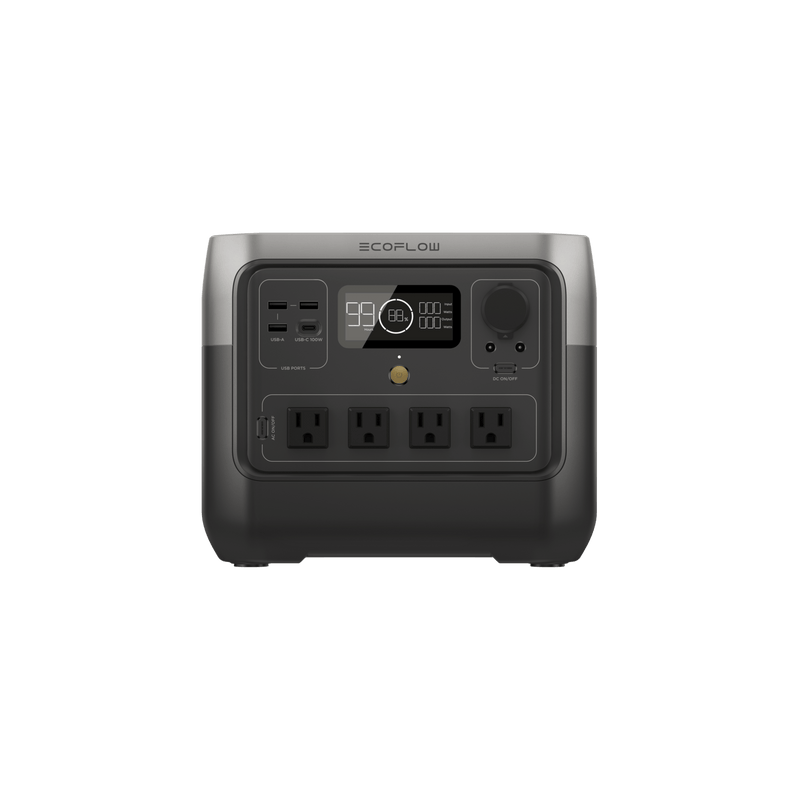
EcoFlow RIVER 2 Pro portable power station
Best overall for camping

EcoFlow RIVER 2 Pro

A balanced match for a practical campsite load, with enough capacity for more than basic phone-and-light duty without moving into the heaviest class.

768 Wh220 W18.2 lb

Trade-off: Its battery capacity cannot be expanded later.

Check price at manufacturer · EcoFlow USExact product listing at EcoFlow US — availability may change
Check Price on Amazon.comExact product listing at Amazon US — availability may change
Anker 521 portable power station
Best lightweight option

Anker 521

A compact pick for charging, lighting, and small-device plans where carrying weight matters most.

256 Wh120 W8.2 lb

Trade-off: Its battery capacity cannot be expanded later.

Check price at manufacturer · Anker SOLIX USExact product listing at Anker SOLIX US — availability may change
Check Price on Amazon.comExact product listing at Amazon US — availability may change

Camping power station comparison

Compare 4 of these picks
PickProductCapacityContinuous / surgeSolar inputWeight
Best overall for campingEcoFlow RIVER 2 Pro768 Wh800 W / 1,600 W220 W18.2 lb
Best lightweight optionAnker 521256 Wh200 W / 450 W120 W8.2 lb
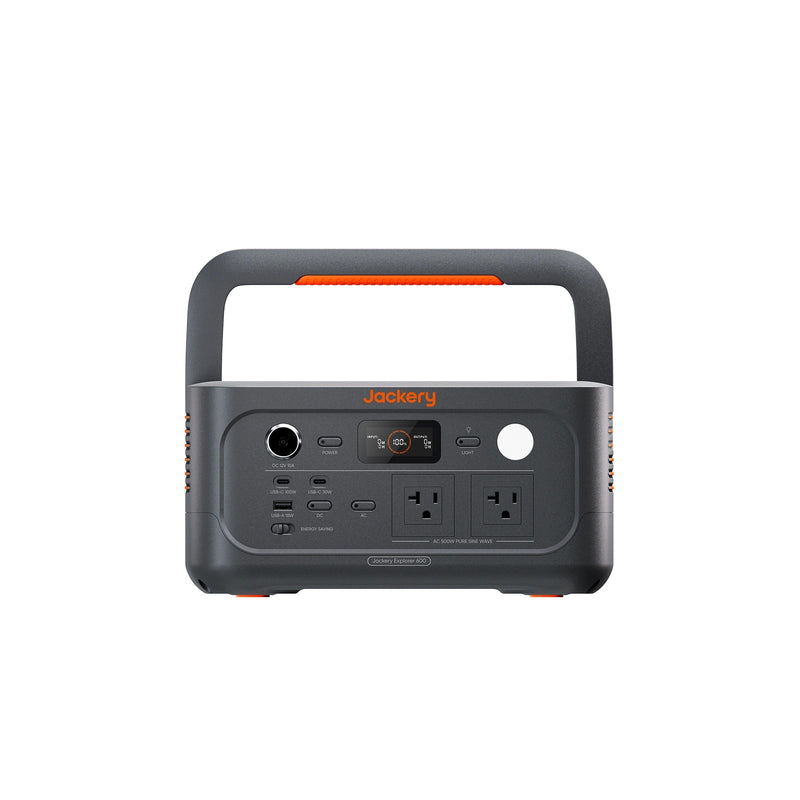
Best for weekend tripsJackery Explorer 600 V2640 Wh500 W / 1,000 W200 W14.1 lb
Best for longer off-grid staysJackery Explorer 1500 V21,536 Wh2,000 W / 4,000 W400 W31.97 lb
Best higher-capacity optionBLUETTI Elite 3003,014.4 Wh2,400 W / 4,800 W1,200 W57.98 lb

Ratings are manufacturer specifications in our normalized dataset. Retail pricing and availability can change; use market-specific links to check current offers.

Category details

Why these products fit different camping plans

Best overall for camping

EcoFlow RIVER 2 Pro

A balanced match for a practical campsite load, with enough capacity for more than basic phone-and-light duty without moving into the heaviest class.

Reference camping profile: 700 Wh · 300 W running · 500 W startup. Match score 87/100.

View product details

Why it matched

  • Meets your 300 W continuous running requirement.
  • Battery capacity is closely sized to your requested runtime.
  • Its surge rating covers your estimated 500 W startup requirement.
  • Weighs 18.2 lb for transport.

Trade-off: Its battery capacity cannot be expanded later.

Best lightweight option

Anker 521

A compact pick for charging, lighting, and small-device plans where carrying weight matters most.

Reference camping profile: 250 Wh · 100 W running · 200 W startup · 15 lb maximum. Match score 87/100.

View product details

Why it matched

  • Meets your 100 W continuous running requirement.
  • Battery capacity is closely sized to your requested runtime.
  • Its surge rating covers your estimated 200 W startup requirement.
  • Weighs 8.2 lb for transport.

Trade-off: Its battery capacity cannot be expanded later.

Best for weekend trips

Jackery Explorer 600 V2

A close capacity fit for a two-day small-device plan while remaining easier to move than larger backup-focused units.

Reference camping profile: 600 Wh · 300 W running · 500 W startup. Match score 91/100.

View product details

Why it matched

  • Meets your 300 W continuous running requirement.
  • Battery capacity is closely sized to your requested runtime.
  • Its surge rating covers your estimated 500 W startup requirement.
  • Weighs 14.1 lb for transport.

Trade-off: Its battery capacity cannot be expanded later.

Best for longer off-grid stays

Jackery Explorer 1500 V2

More stored energy for multi-day plans that include cooling, lighting, and regular device charging.

Reference camping profile: 1,500 Wh · 700 W running · 1,200 W startup. Match score 83/100.

View product details

Why it matched

  • Meets your 700 W continuous running requirement.
  • Battery capacity is closely sized to your requested runtime.
  • Its surge rating covers your estimated 1,200 W startup requirement.
  • Weighs 31.97 lb for transport.

Trade-off: Its battery capacity cannot be expanded later.

Best higher-capacity option

BLUETTI Elite 300

The strongest match in the verified catalog for a larger campsite profile with heavier loads and more energy headroom.

Reference camping profile: 2,500 Wh · 1,200 W running · 2,000 W startup. Match score 78/100.

View product details

Why it matched

  • Meets your 1,200 W continuous running requirement.
  • Battery capacity is closely sized to your requested runtime.
  • Its surge rating covers your estimated 2,000 W startup requirement.
  • Weighs 57.98 lb for transport.

Trade-off: At 57.98 lb, it is difficult to carry frequently.

Starting points

Example camping setups

These examples use the calculator's existing cited and curated presets. Every wattage, duration, and simultaneous-load choice is editable after opening the calculator.

Light camping

Fan + two LED lights + phone charging

Estimated energy need
316 Wh
Continuous running load
89 W
Startup / surge requirement
189 W
Size this setup

Weekend camping

Mini-fridge + fan + lights + phone + laptop

Estimated energy need
1,075 Wh
Continuous running load
249 W
Startup / surge requirement
449 W
Size this setup

Larger campsite setup

Mini-fridge + fan + four lights + laptop + coffee maker

Estimated energy need
2,133 Wh
Continuous running load
1,148 W
Startup / surge requirement
1,348 W
Size this setup

Energy need is device energy before conversion loss and reserve. Mini-fridge duty cycle and startup allowance are editable planning estimates; verify your appliance nameplate.

How much capacity you need

Watt-hours determine approximate runtime. Add device energy over the whole trip, then allow for conversion losses and reserve. Refrigeration, cooking, and longer stays increase the total quickly.

Portability versus capacity

More battery usually means more weight. For walk-in sites, start with essential loads and carrying limits. For vehicle-access sites, extra capacity may be practical when the added weight is acceptable.

Solar charging considerations

Compare the station's solar-input limit with your panel setup. Plan conservatively for shade, weather, panel angle, and limited daylight; rated panel output is not guaranteed field production.

Build your camping power plan

Add your devices and intended hours. The calculator checks energy, continuous load, and startup surge before recommending products.

Planning for outages instead? Read our Home Backup guide.

Frequently asked questions

How many watt-hours do I need for camping?

Add each device’s watts multiplied by its expected hours, account for devices that cycle on and off, then allow for conversion losses and reserve. A phone-and-light setup can need only a few hundred watt-hours, while refrigeration or cooking loads can raise both energy and inverter requirements quickly.

Can I run a camping fridge from a power station?

Only when the continuous inverter rating covers the fridge’s running load and the surge rating covers compressor startup. Battery capacity then determines approximate runtime. Use the fridge nameplate when possible because models vary.

How important is solar input for camping?

Solar input matters most when you stay beyond the energy already stored in the battery. Real charging depends on panel rating, sun, angle, temperature, shade, and the power station’s solar-input limit, so panel wattage alone does not guarantee a daily recharge.

Do affiliate commissions affect these camping picks?

No. Eligibility and ranking use the same capacity, output, portability, camping-use, and feature criteria described in our methodology. Price and commission rates are not ranking inputs.

This guide uses manufacturer specifications and transparent planning profiles, not hands-on testing claims. Check the linked product record and manufacturer documentation before purchase.